Crack Repair · Countertops · Floors · Manhattan

Marble Crack Repair in Manhattan

Most cracked marble can be repaired, not replaced. We clean the crack, fill it with color matched stone epoxy, then hone and polish the area until it blends into the counter or floor around it. Done in your home or building, usually in a single visit.

5.0 · Read our Google reviews Read our Yelp reviews
In Manhattan since 1997 Fully insured · COI provided Phones answered 24/7
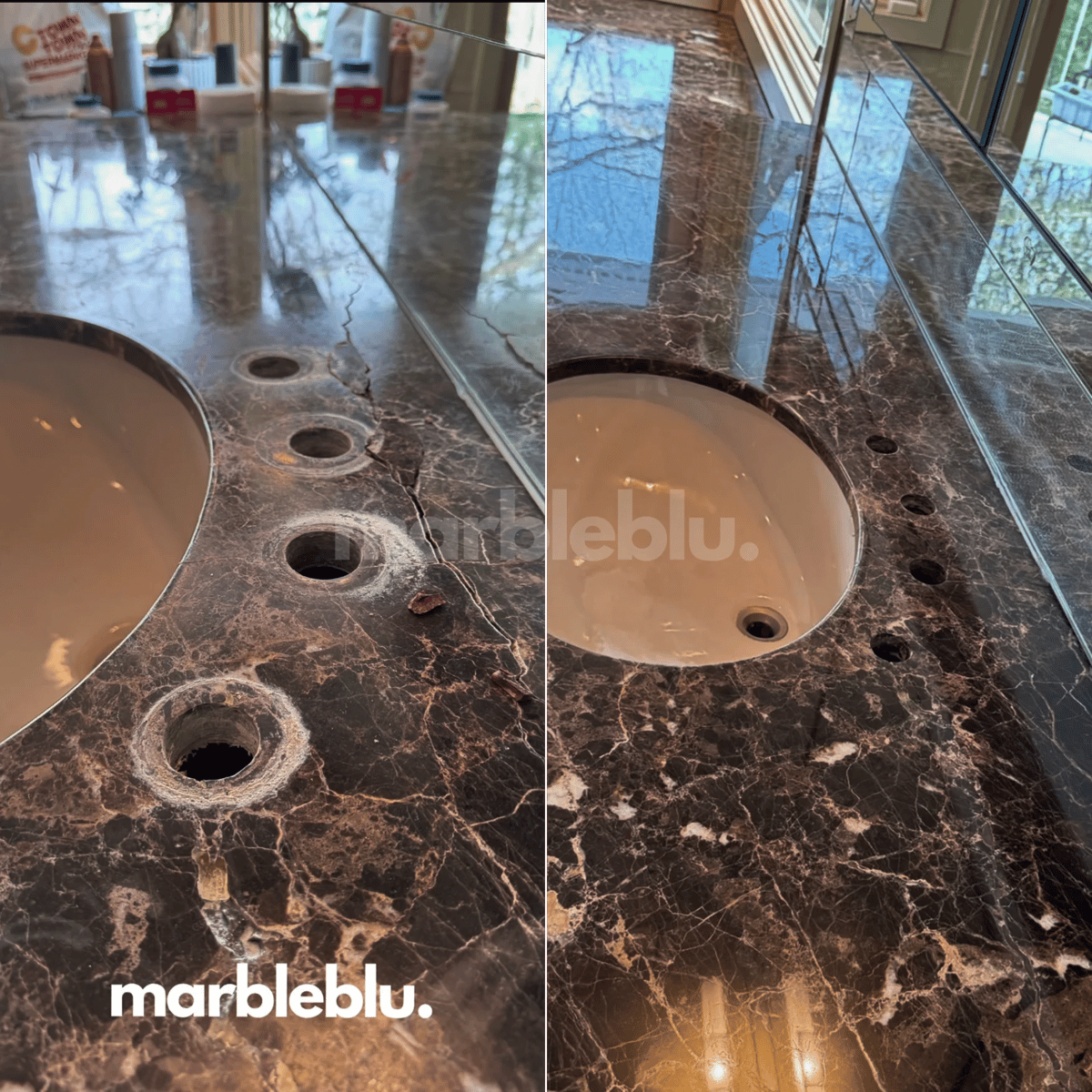
Before and after comparison of a dark brown marble bathroom vanity; the left side shows dull, etched stone with stains and the right side shows restored, glossy marble with an undermount sink.
Before After

A marble vanity in a Manhattan apartment, before and after: dull, etched and stained on the left, then restored and polished on the right.

The Short Answer

Most cracked marble can be repaired.

A crack in marble looks worse than it usually is. Marble is a natural stone with veins running through it, so a break often follows a line that was already there. Once the crack is filled with material matched to that stone and the surface is polished back, it tends to read as another vein rather than damage.

MarbleBLU of Manhattan repairs cracks in marble countertops, kitchen islands, bathroom vanities, floors, thresholds and tabletops across Manhattan. We work on the stone where it sits, so nothing gets ripped out and your kitchen or bathroom is not out of use for weeks.

Crack repair sits inside our broader marble repair work. If the damage is specifically on a kitchen or bathroom top, our marble countertop repair page covers that in more detail, and if your counter is granite rather than marble, see granite countertop repair.

Since

1997

Where

Manhattan

Estimates

Free

Types of Cracks

Five kinds of cracks, five different repairs.

Where a crack is and how it started both change how we fix it. A hairline in a vanity top is a very different job from a tile that has cracked through in a floor.

Hairline cracks

Thin surface lines that look like a scratch but run into the stone. These are the easiest to fix. The crack is drawn tight, filled with thin epoxy that wicks into the opening, then polished flush so the line disappears from normal viewing distance.
Cracks near sinks and cooktops

The most common crack we see. Countertops are cut out for a sink or a cooktop, and those cutouts are where stress concentrates. A dropped pot or a heavy pan can start a crack running out from a corner. We stabilize it first, then fill and blend.

Cracks across floor tiles

Usually from a heavy load, a hollow spot under the tile, or movement in an older building. Where the tile is otherwise sound we repair the crack in place, fill the break, then hone and polish the tile so the finish matches the rest of the floor.

Cracked thresholds

Marble saddles at bathroom and entry doors take a lot of abuse and they crack along the thin part at the top of the bevel. We remove the piece, repair and refinish the break on the bench, and set it back so the profile and finish look original.

Cracks at seams

Sometimes what looks like a crack is actually a seam between two slabs where the original adhesive has let go. We cut the old seam material out, clean the joint, and re-bond it with fresh color matched epoxy so the two pieces read as one top again.

Send a photo first

A clear photo tells us most of what we need. Send one and we will tell you whether it looks repairable and roughly what is involved before we ever come out.

Book a free estimate
How We Repair It

Four steps from cracked to blended in.

The work itself is careful rather than complicated. What takes skill is matching the color and the finish so the repair stops being visible.

01

Clean the crack

Dust, old sealer, soap film and loose material all have to come out first. If anything stays in the joint, the epoxy bonds to the dirt instead of the stone and the repair fails later.

02

Fill with color matched epoxy

We mix stone epoxy to the color of the marble around the break, tinting toward the veining rather than the base color. It goes in under pressure so it reaches the full depth of the crack, not just the top.

03

Let it cure

The epoxy needs time to harden fully before any abrasive touches it. Working it too early is what leaves a soft spot or a cloudy patch that shows under kitchen light.

04

Hone and polish

Then we grind the filler level and bring the finish back with progressively finer diamond abrasives, feathering out past the repair so there is no ring or dull halo around it. Sealing comes last.

Watch the Work

What the repair actually looks like.

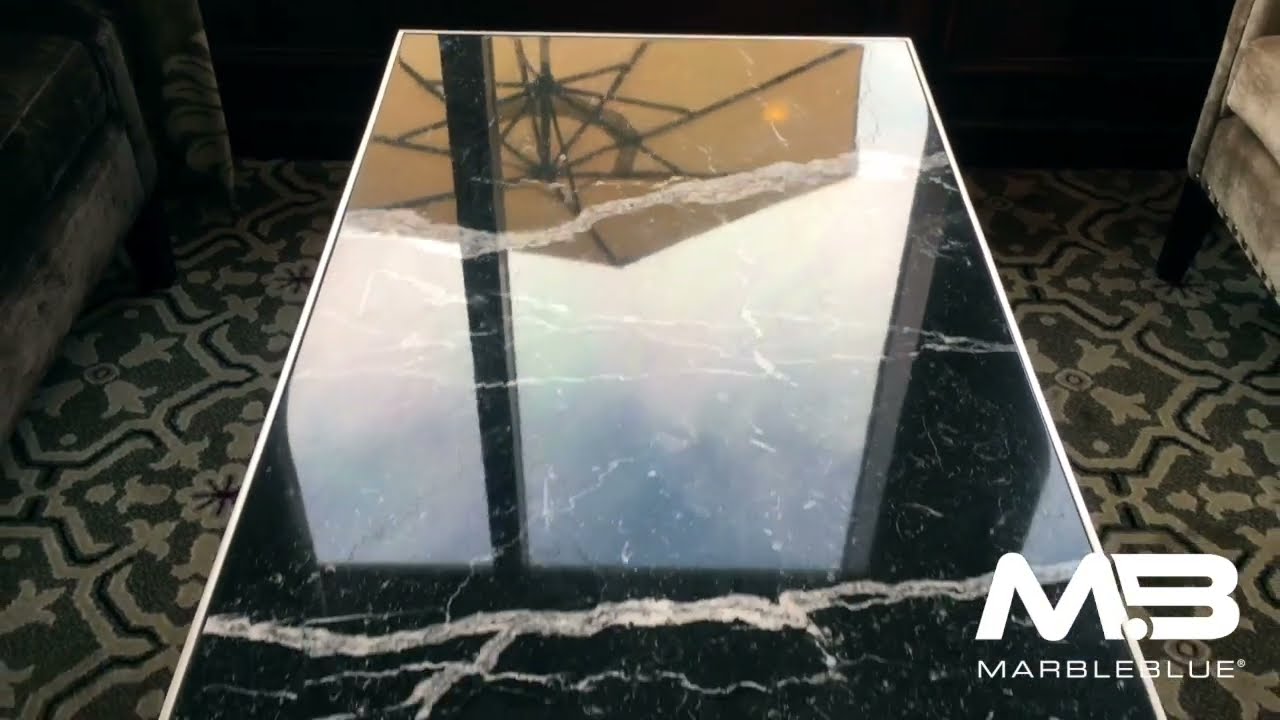
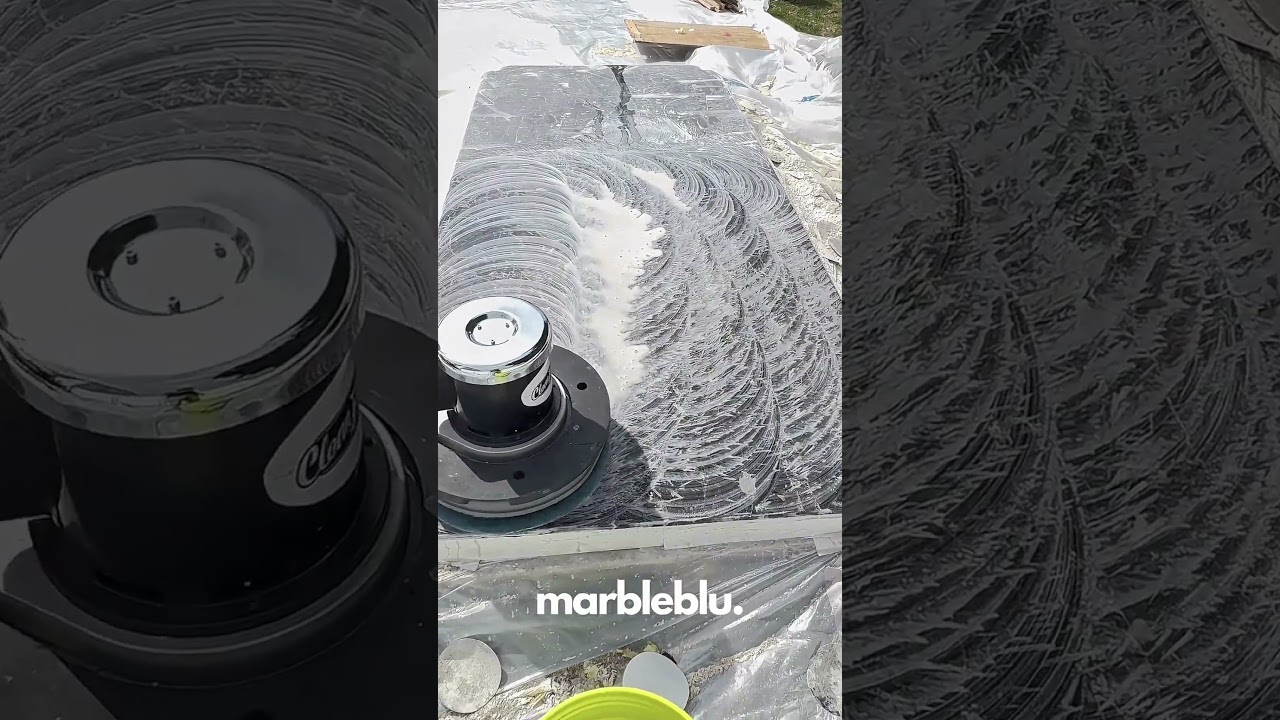
Three short clips from real jobs. Grinding, filling and polishing, the same way we work a crack in an apartment.

Marble restoration demonstration by MarbleBLU of Manhattan
Diamond grinding and polishing on natural stone.
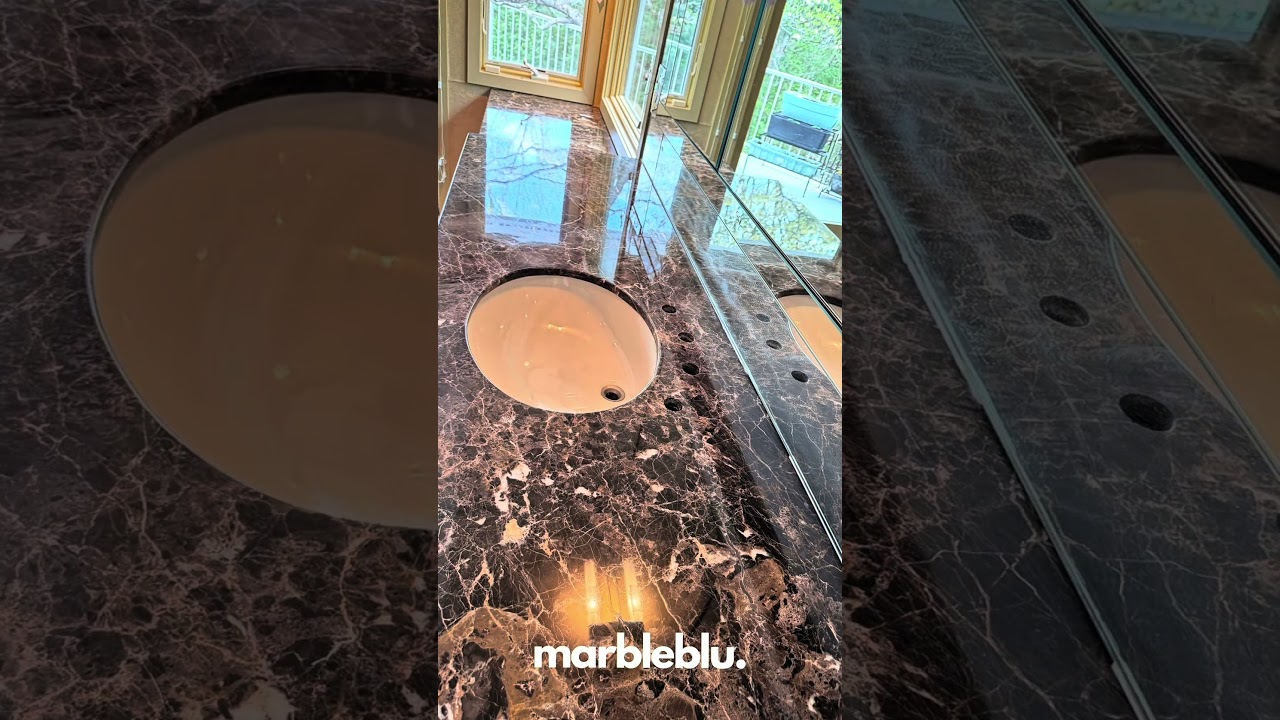
Marble countertop restoration before and after by MarbleBLU of Manhattan
A countertop before and after restoration.
Marble restoration process by MarbleBLU of Manhattan
The restoration process, start to finish.

Want to see more completed work? Our before and after gallery has countertops, floors and bathrooms from Manhattan buildings.

Book a free estimate
Straight Talk

When replacement makes more sense.

We would rather tell you the truth at the estimate than take the job and hand you something that does not hold up. Repair is the right call most of the time, but not every time.

Cases where we will suggest replacing instead

  • The slab has come loose from its base. A crack that is paired with a hollow, moving counter is a support problem. The stone will crack again the moment someone leans on it.

  • A piece has shifted or dropped. If one side of the break sits lower than the other, the two faces no longer line up and a filler will not bridge the step.

  • The stone is in several pieces. Multiple cracks radiating from one point usually mean the slab has lost its structural integrity, and small repairs will not bring that back.

  • A floor tile is cracked and hollow. A hollow tile has lost its bond to the setting bed. Repairing the surface will look fine briefly, then crack again from movement underneath.

If replacement is the better answer, we say so at the estimate and that is the end of it. We do not sell or install stone, so there is nothing in it for us either way. Call 212-627-2532 and describe what you are seeing, or book a free estimate.

Why MarbleBLU

Restoration only. Manhattan only.

We have been repairing stone in Manhattan buildings since 1997. We never sell a new counter, so the advice you get is about your marble, not about a sale.

In Manhattan since 1997

Nearly three decades of co-ops, condos, townhouses, rentals and offices. We know how these buildings work.

Restoration only

No installation, no fabrication, no stone sales. We fix what you own or we tell you it is not fixable.

Dustless wet process

Water fed tools keep dust down, which matters in an apartment where the kitchen is also the living room.

Insured, COI provided

Certificate of insurance naming your co-op, condo or managing agent, issued before we arrive.

Phones answered 24/7

A real person picks up, day or night. Call 212-627-2532.

All of Manhattan

The Battery to Inwood, East Side and West Side. No travel surcharge anywhere in the borough.

FAQ

Marble crack repair questions, answered

The four things Manhattan homeowners ask us most about cracked marble. Something else on your mind? Call 212-627-2532.

Talk to us about the crack

Tell us what you are seeing and we will tell you whether it looks repairable and roughly what is involved. Free estimates, in person.

A close-up view of a polished white marble slab showcasing its natural intricate grey veining patterns, perfect for interior design inspiration

Free estimates · Manhattan

Repair the crack, keep the marble.

Tell us where the crack is and how it started. We will tell you whether it can be repaired, what the repair involves, and what it costs. If replacement is the better call, we will say so.

Phones answered 24/7 · Certificate of insurance for co-op and condo buildings